
 AI Knowledge Club Admin
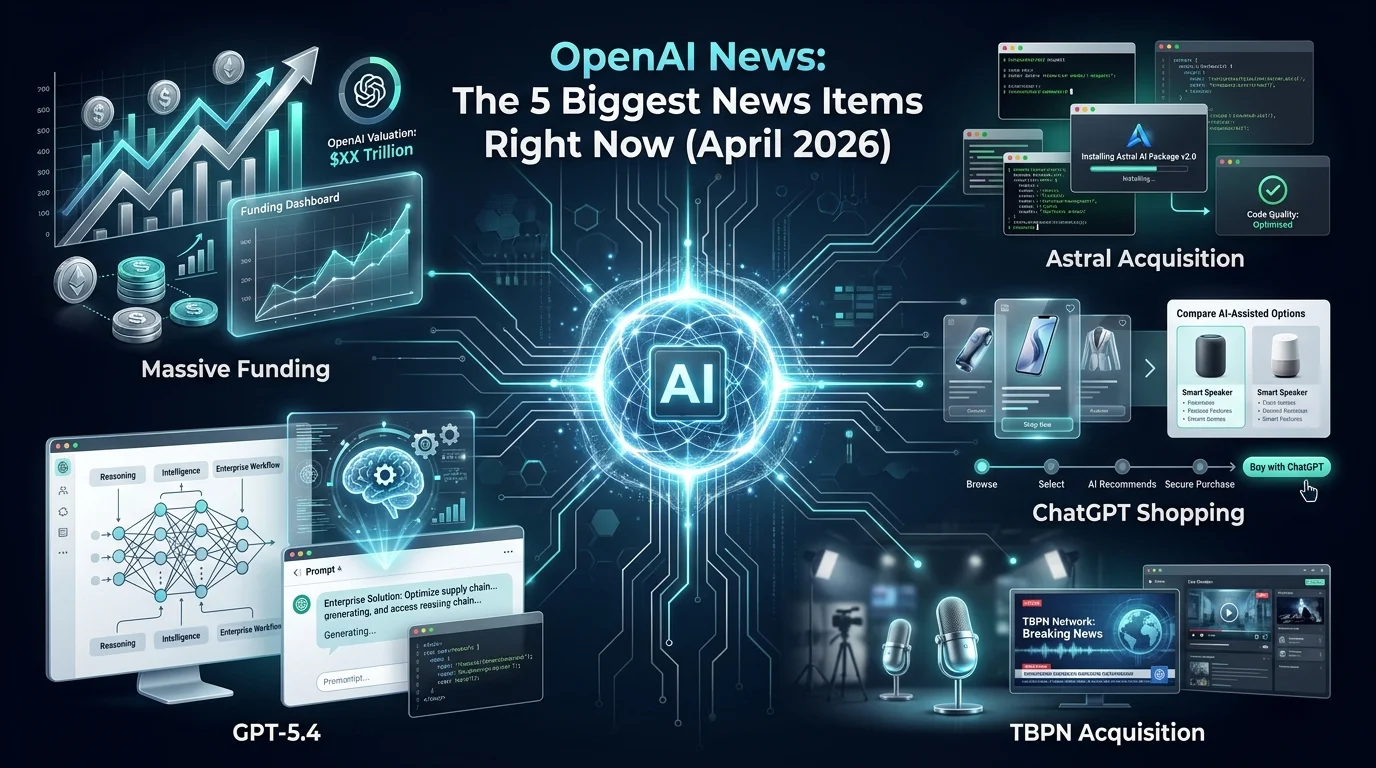
OpenAI News: The 5 Biggest News Items Right Now (April 2026)
If you want to understand the current AI landscape, you need to track these strategic moves. In recent weeks, OpenAI secured unprecedented funding, released a powerful new model, integrated native shopping features, and acquired two highly strategic companies. This is not a simple product roadmap. It is a comprehensive strategy to dominate every layer of the digital economy.
Here are the five biggest OpenAI news updates for April 2026 you need to know, including what changed and why each development matters for your business.
1. OpenAI Funding News: The $122 Billion Capital Injection
On March 31, 2026, OpenAI announced a massive $122 billion funding round in committed capital. This brings the company to an astonishing $852 billion post-money valuation.
Capital at this scale shifts the entire technology sector. The funds will likely support massive computing infrastructure build-outs, talent acquisition, and further strategic buyouts.
Why this matters
To compete in the foundational AI model space, companies need massive compute power. Training the next generation of models requires billions of dollars in specialized hardware and data center infrastructure. That is why this OpenAI news April 2026 update matters so much. Funding at this scale can price out smaller competitors while giving OpenAI more room to experiment, expand, and scale without the same cash flow pressure. For AI professionals, it signals that the infrastructure layer may continue to centralize around a few heavily funded giants.
2. OpenAI Updates April 2026: GPT-5.4 Pushes Enterprise AI Forward
OpenAI introduced GPT-5.4 on March 5, 2026, positioning it as their flagship model for serious professional work.
Earlier models were highly capable, but they often struggled with deep reasoning over long contexts and multi-step execution. GPT-5.4 changes the baseline for enterprise AI. It offers vastly improved logic, fewer hallucinations, and a structural design optimized for complex workflows like legal analysis, advanced software engineering, and financial modeling.
Why this matters
GPT-5.4 is built for reliability. Businesses that previously hesitated to deploy generative AI for mission-critical tasks now have a secure, highly capable engine. If your organization relies on complex data analysis or autonomous workflows, this model provides the necessary precision. Professionals need to adapt their workflows immediately to integrate these advanced capabilities, or risk falling behind competitors who use GPT-5.4 to automate complex cognitive labor.
3. OpenAI Astral Acquisition Strengthens the Developer Ecosystem
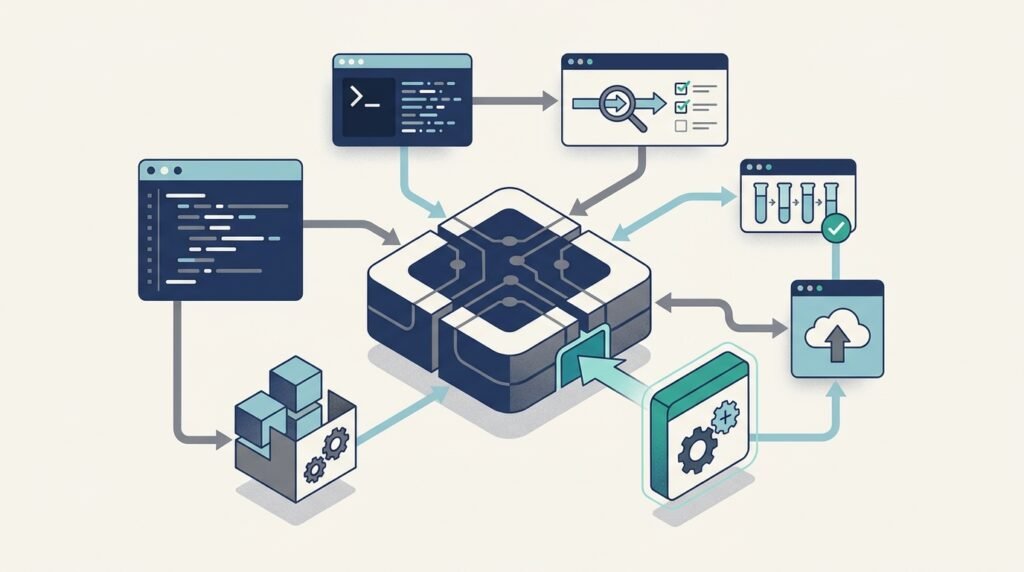
On March 19, 2026, OpenAI announced plans to acquire Astral. Astral is the company behind highly popular, high-performance Python developer tools like uv and Ruff.
Python remains the dominant programming language for machine learning and data science. Astral’s tools, built in Rust, are known for their extreme speed and efficiency. By bringing Astral in-house, OpenAI is taking direct control over the tooling that millions of AI developers rely on every day.
Why this matters
This OpenAI Astral news points to a vertical integration strategy. OpenAI wants to own the entire developer experience. By integrating tools like uv and Ruff into its ecosystem, the company can streamline how developers build, test, and deploy AI applications. If you build AI software, expect tighter integrations between OpenAI’s APIs and your local development environment. It reduces friction for developers and locks them further into the OpenAI ecosystem.
4. The Shift Toward Agentic Commerce: ChatGPT Shopping
OpenAI announced product discovery features in ChatGPT on March 24, 2026. Users can now search for, compare, and purchase physical products directly within the chat interface.
This move transforms ChatGPT from an information-retrieval engine into an active transactional platform. The AI acts as an autonomous shopping agent, browsing the web for the best deals, reading reviews, and recommending specific products based on the user’s highly specific prompts.
Why this matters
This update signals the true arrival of agentic commerce. Consumers will increasingly rely on AI agents to make purchasing decisions. For marketers and business owners, traditional search engine optimization is no longer enough. You must optimize for autonomous agents. If your product data is not structured perfectly for AI models to read, compare, and recommend, ChatGPT shopping agents will simply ignore you. This shifts the digital marketing landscape toward strict data formatting and technical optimization.
5. Controlling the Narrative: The TBPN Acquisition
In a surprising move, OpenAI announced the acquisition of TBPN on April 2, 2026. TBPN is an online business talk show and independent media network.
While acquiring developer tools and building e-commerce features aligns with traditional software growth, buying a media company is different. OpenAI acquired TBPN to accelerate global conversations around AI and support independent media. The network gives OpenAI a direct channel to communicate with builders, enterprise leaders, and the general public.
Why this matters
Public perception is a major hurdle for AI adoption. Regulatory pressure, ethical concerns, and general fear about job displacement create friction. By acquiring a media property, OpenAI gains a powerful platform to shape the narrative, educate the public, and broadcast its vision for the future. For industry professionals, it highlights the importance of controlling the conversation. AI is no longer just a technical challenge; it is a cultural and political one.
The Next Phase of the OpenAI Ecosystem
These latest OpenAI updates reveal a clear pattern. OpenAI is not satisfied with being an API provider. They are building a self-sustaining ecosystem.
The $122 billion funding round buys the necessary compute. GPT-5.4 provides the cognitive engine. The Astral acquisition secures the developer base. ChatGPT shopping captures consumer transactions. The TBPN acquisition controls the cultural narrative.
As we look past April 2026, expect OpenAI to push further into operating systems and hardware integrations. The lines between software, commerce, and media are dissolving. To thrive in this environment, AI professionals must look beyond individual feature releases. You need to understand how these interconnected systems work together. Adapt your technical skills, optimize your digital storefronts for autonomous agents, and prepare for a web dominated by consolidated AI platforms.