
 AI Knowledge Club Admin
The Rise of Agentic Commerce: Navigating the Era of Delegated Shopping
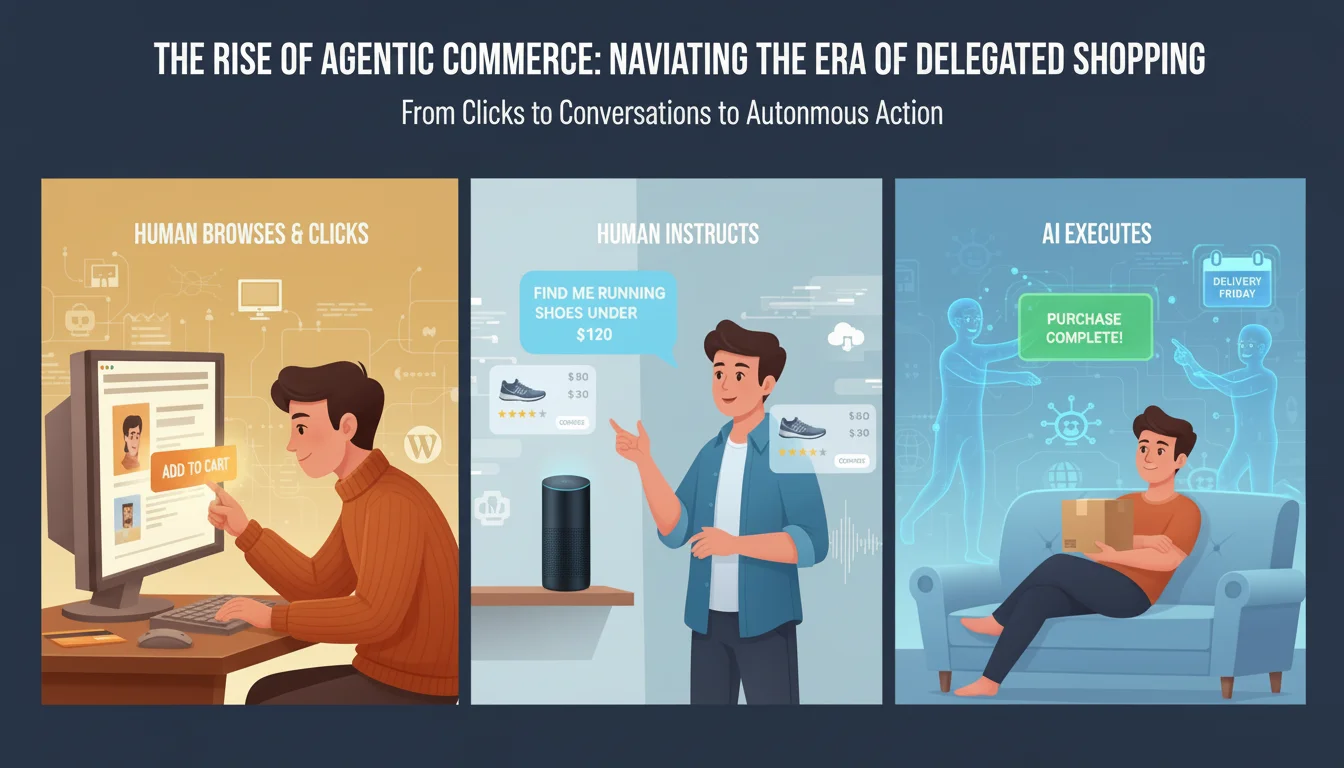
The checkout button has long been a key part of online shopping. Designers spent years making it better, changing its color, where it sits on the page, and what it says. All of this so that people could buy faster and more easily. However, as businesses move toward implementing agentic commerce, the focus is shifting from human-centric design to machine-to-machine transactions.
The way we shop online is about to change.
Agentic commerce is a new way for transactions to happen. An AI agent, acting on behalf of the shopper, browses, compares, and buys without the person having to visit the store’s website.
Research from McKinsey says half of all shoppers now use AI to search online. Of those, 44% say AI search is their main way to find and buy things. The old shopping path isn’t just shorter, it’s disappearing.
AI-powered checkout is already live. In September 2025, OpenAI added Instant Checkout to ChatGPT. U.S. shoppers could buy from Etsy merchants right inside ChatGPT. Soon after, Shopify joined in, bringing millions more brands like Glossier, SKIMS, and Vuori.
Shopify saw AI-driven visits to its stores grow seven times in 2025. Orders from AI searches rose eleven times. According to Forbes, ChatGPT now sends 15% of Target’s traffic and 20% of Walmart’s.
In January 2026, Google introduced the Universal Commerce Protocol (UCP) at a big industry event. Companies like Shopify, Etsy, Wayfair, Target, and Walmart all helped build it. Agentic commerce is now a new standard, not a future idea.
For store owners and digital planners, the big question isn’t “Is this coming?” It’s here. Now you must ask: Is your store’s data ready for machines, not just people, to understand and use?
Key Takeaways: Implementing Agentic Commerce Successfully
- Agentic commerce lets AI agents buy things for people, skipping the normal online shopping steps.
- New standards such as MCP, ACP, AP2, and UCP are making AI-powered purchases possible across many platforms.
- Having clear, machine-readable product data is now key for brands that want to be found and bought by AI agents.
- The shift to agentic commerce is happening fast. Businesses must adapt their catalogs and systems now to stay competitive.
📚 Key Terms at a Glance
|
Term |
Meaning |
|---|---|
|
MCP |
Model Context Protocol (Anthropic) — connects AI agents to real-time merchant data |
|
ACP |
Agentic Commerce Protocol (OpenAI/Stripe) — enables programmatic checkout |
|
AP2 |
Agent Payments Protocol (Google) — cryptographically signed payment mandates |
|
UCP |
Universal Commerce Protocol (Google) — end-to-end commerce standard |
|
A2A |
Agent2Agent Protocol — enables AI agents to communicate |
|
GEO |
Generative Engine Optimization — optimizing for AI answer selection |
What is Agentic Commerce? From Conversational to Executive AI
Not all AI shopping is the same. This difference matters.
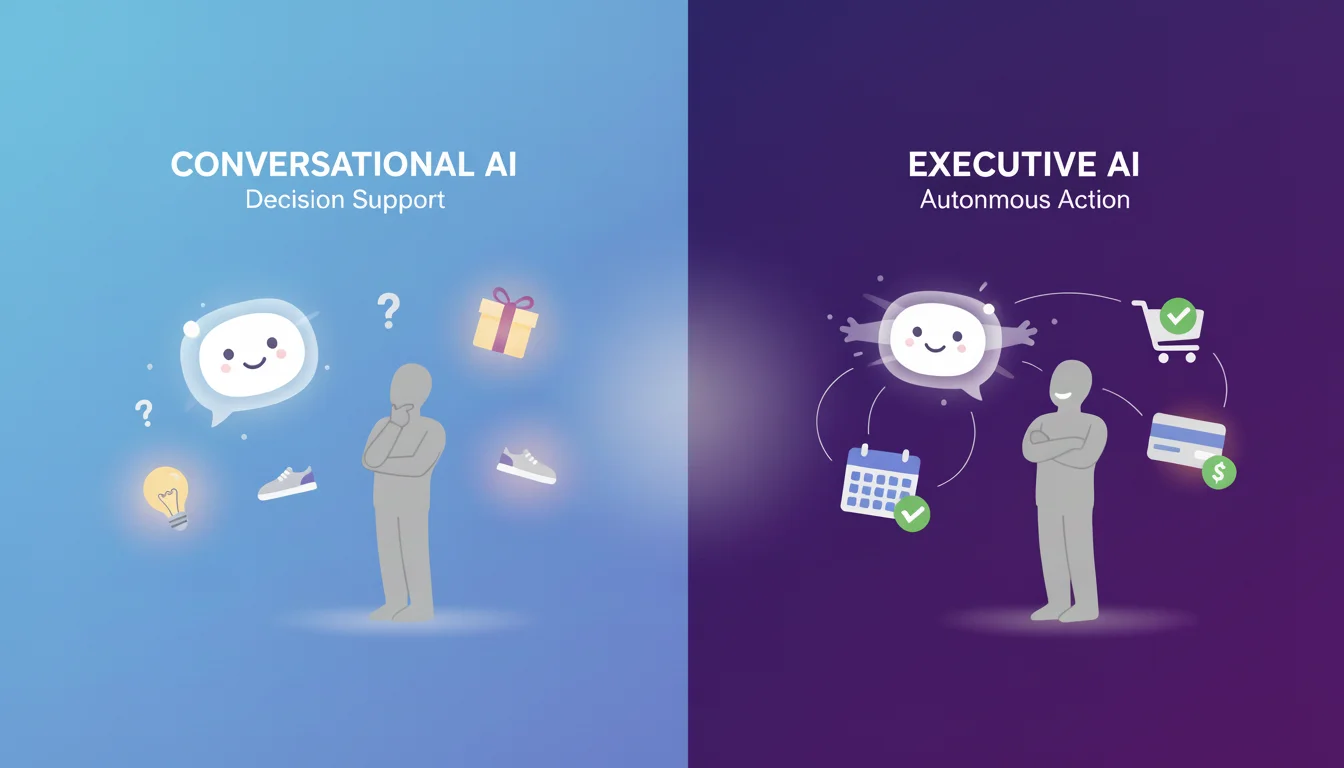
Conversational commerce is when AI helps but doesn’t act alone. For example, someone asks, “What’s a good gift for a cook?” The AI suggests options. The person chooses and buys. The AI helps, but the human does the shopping.
Agentic commerce goes a step further. The person says, “Buy a birthday gift for my wife under $150, delivered by Friday, based on her Pinterest board.” The AI agent searches stores, checks stock and delivery, uses points if possible, and finishes the order. The person sets the goal, but the AI agent does the shopping.
We’ve moved from AI that only helps to AI that acts. Research from METR found that the time it takes AI to complete tasks (with a success rate above 50%) has doubled every 7 months since 2019. Anthropic’s Claude 4.5 can tackle tasks in 30 hours that would take a skilled person. These are not simple chatbots; they are advanced agents doing all the steps on their own.
Visa explains this change happens in four big steps: AI Recommends, AI Initiates (user confirms checkout), AI Transacts (AI completes small purchases within set rules), and AI Orchestrates (AI manages all parts of buying, from payment to delivery, with little human help). Each step shortens the shopping journey. By the final step, AI agents handle payments, budgets, and shipments on their own.
The Technical Backbone: Implementing Agentic Commerce with 4 Key Protocols (MCP, ACP, AP2, UCP)
Every AI-powered checkout runs on important new rules called protocols. These make sure AI agents can talk to store systems, payment tools, and to each other. Knowing these four is important for anyone who wants their products to show up in agentic commerce.
Model Context Protocol (MCP)
Anthropic launched MCP in November 2024. This standard enables developers to connect their store’s live data to AI agents via secure two-way links. Think of MCP as the “USB-C for AI”, a single connector for agents to see real-time products and prices. No more custom fixes for every new app or tool.
Before MCP, every new connection meant more code and testing. MCP replaces this with one universal solution. For stores, this means your catalog is easy for machines to read. For AI agents, it means they can check your stock and prices as they really are.
Companies like Block, Apollo, Zed, Replit, and Codeium already use MCP.
Agentic Commerce Protocol (ACP)
On September 29, 2025, OpenAI and Stripe made it possible to buy through ChatGPT using ACP, an open standard they created together. ACP lets AI agents and stores talk in a shared language for online buying.
With ACP, when someone confirms a buy in ChatGPT, the agent sends the order to the store using ACP. The store checks, approves, takes payment, and ships using its normal process. The store always stays in charge of its customer connection.
ACP uses “Shared Payment Tokens,” which are encrypted and specific to a single store and order. They allow payment without showing actual card numbers. Stripe stores can turn on agentic payments by changing just one line of code. ACP is open-source and works with any payment system.
Will Gaybrick, president of technology at Stripe, said, “We’re building tools businesses need to succeed in a world where agent-led shopping is normal.”
Agent Payments Protocol (AP2)
Google Cloud rolled out AP2 in September 2025. Over 60 groups, like Mastercard, PayPal, American Express, Adyen, Coinbase, Salesforce, and Worldpay, helped make it.
AP2 solves a big problem: ensuring an AI agent truly has permission to buy on someone’s behalf. It also verifies what the agent buys and keeps a record of it.
AP2 uses “Mandates”, digital, signed contracts proving the person’s orders. For instant shopping, an Intent Mandate shows what the person asked for, and a Cart Mandate confirms the items and their prices before payment. For set-and-forget shopping, the person signs upfront with rules for price, timing, and more. The AI agent buys when those rules are met.
AP2 answers three trust questions: Did the person really want this? Does the agent’s request match the person’s choice? Who is responsible if things go wrong? AP2 works with A2A and MCP, as well as many payment methods.
Universal Commerce Protocol (UCP) and Agent2Agent (A2A)
Google CEO Sundar Pichai introduced UCP in January 2026. This open standard covers the entire shopping process, from finding products to final help after buying. It helps agents and systems work together across many store types and payment methods.
UCP was built with Shopify, Etsy, Wayfair, Target, and Walmart, and is supported by over 20 other big companies. UCP works with other protocols: it uses A2A to communicate between agents, AP2 to handle payment rules, and MCP for real-data connections.
A2A is a special protocol started by Google and now managed by the Linux Foundation. A2A lets AI agents talk to each other, share info, and work across different systems. It does this safely, without sharing their private data. Over 100 top tech firms, including AWS, Salesforce, SAP, and Microsoft, support A2A.
Together, MCP, ACP, AP2, and UCP/A2A are the new foundation of agentic commerce. In the first days of online shopping, HTTP and SSL created the first web stores. Now, these four protocols are what make agent shopping work.
[DIAGRAM PLACEMENT: A flowchart showing MCP connecting merchants to AI agents, ACP/AP2 handling payment authorization, and UCP/A2A coordinating the full journey from discovery to fulfillment.]
Machine-Readable Product Data: Implementing Agentic Commerce for a New Competitive Advantage
Here’s what many stores have not realized: AI agents do not use your website as people do. They don’t see your banners, videos, or brand stories. They only read the structured data behind your site, which is why implementing agentic commerce requires a complete shift toward machine-readable catalogs rather than just visual appeal.
If your product info isn’t easy for machines to read, your store is invisible to these new AI shoppers.
This changes what “being found” means. SEO used to be about ranking highly in search results through good keywords and links. Generative Engine Optimization (GEO) and Answer Engine Optimization (AEO) are about making your products easy for AI agents to find and use as answers.
What does it take to be machine-readable?
- Structured Product Data: Include product numbers, clear categories, and detailed information (e.g., size, color, and compatibility).
- Live Inventory and Price APIs: Let agents check what’s in stock and what it costs, right now, not yesterday.
- Natural-Language Descriptions: Add helpful, clear product stories. Say who the product is for, what it fixes, and how it’s better than others. This gives AI more to work with.
- MCP-Friendly Backends: Build your system so AI agents can get real info directly, not just read from a webpage.
If your AI agent can’t see your delivery dates or return rules, or doesn’t know if you have an item in stock, it won’t buy from you. Machine-readable data is your ticket to this new kind of shopping.

Agent-to-Agent (A2A) Negotiation: How AI Agents Will Transact Autonomously
Another big change is Agent-to-Agent (A2A) negotiation. Here, a buyer’s AI agent and a seller’s AI system talk and make deals. People aren’t part of the conversation.
AP2 allows for “personalized offers.” For example, if a shopper’s agent needs a new bike before a trip, the seller’s agent can offer a discount bundle just for that buyer and time.
This is huge in business-to-business sales. Procurement agents (AIs that buy for companies) can stick to budgets, place orders, and pay bills, without needing people to approve every detail. BigCommerce says these agents follow company rules and handle approvals, saving lots of time.
So, negotiation isn’t just faster. It’s smarter. Buyer and seller agents can work out the best price, shipping, and more in real time and at scale.
Human-in-the-Loop: The Guardrails That Matter for Implementing Agentic Commerce
Implementing agentic commerce doesn’t replace people; it gives them new roles, shifting human focus from manual task execution to high-level strategic oversight and agent management.
The right level of human control depends on what’s being bought. For regular, low-cost items (like household supplies or business basics), set rules and pre-approvals so that agents can handle everything. Walmart’s 2025 report notes that these types of products are moving first to agent-powered buying.
For big purchases (expensive items or complex deals), people still approve the final order. The AI builds recommendations and carts, but humans decide before paying. AP2’s Cart Mandate keeps a record of the order and price for approval.
Security is a top concern. AP2’s signed contracts track every part of the purchase, intent, and payment. This makes it easy to check for mistakes or fraud. As Adyen (an AP2 developer) said, “Agentic commerce is not just about a consumer chatbot, it’s about the strong systems underneath.”
Privacy is just as important. UCP keeps payment details safe. The AI agent never sees your payment card numbers, just coded tokens. Merchants and payment providers handle all sensitive data within their own secure systems.
How to Prepare for Implementing Agentic Commerce: A 5-Step Merchant Checklist
The gap between stores ready for agents and those stuck with outdated systems is widening quickly. McKinsey predicts U.S. retail could see up to $1 trillion in sales managed by agentic commerce by 2030. Worldwide, it could reach $3–5 trillion. The whole agentic AI market is set to grow from about $5 billion now to almost $200 billion by 2034.
If you want your business to be part of this future, here’s what to do:
- Check your product data quality first. List all needed info, prices, and real inventory. Add product numbers, compatibility details, easy-to-read benefits, and good images.
- Make live APIs available. Share your catalog, inventory, prices, and order details with programmatic (automated) connections. “Headless” APIs are no longer extra; they are required.
- Review ACP and UCP integration. Both are open, and ACP can sometimes be switched on with only a code update (for Stripe users). Check agenticcommerce.dev for ACP and ucp.dev for UCP details.
- Write clear, machine-readable policies. Return and shipping rules, loyalty programs, and guarantees should be easy for computers, not just people, to read.
- Use Schema markup. Over 45 million sites do this. Product and offer schema help AI agents understand what you sell.
The Winner-Takes-All Dynamic in Agent-Addressable Commerce
McKinsey’s prediction for agentic commerce, a $3–5 trillion global market by 2030, includes a serious warning: Not every brand will win equally.
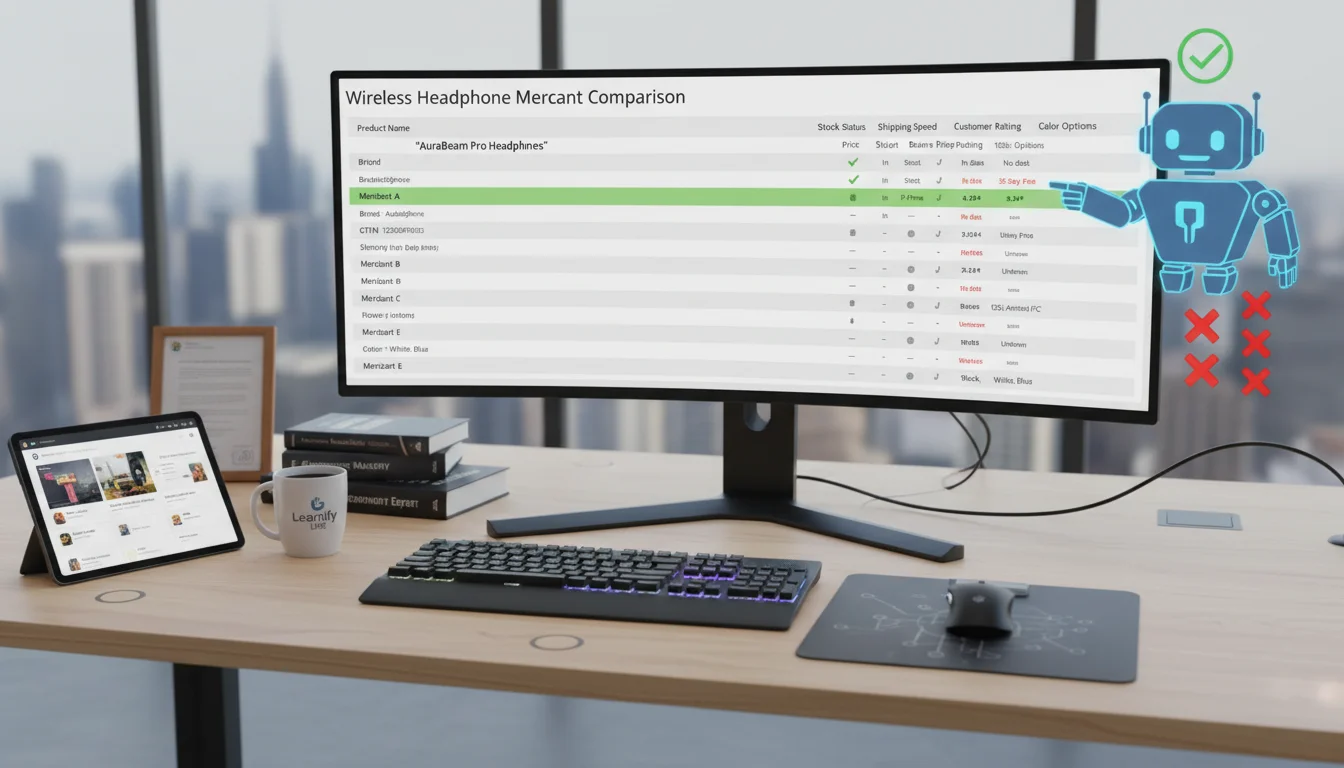
AI agents look for the best match for a user’s criteria, price, in-stock status, speed, and clear policies. The brand with the best machine-readable data, updated in real time, wins a much bigger share of orders.
Human shoppers might choose your store for your story, pictures, or because they remember you. AI agents only look at data and facts.
All the important standards, MCP, A2A, AP2, ACP, and UCP, are now in place. The new shopping world is here. Now it’s about whether you act.
Is Your Product Catalog Agent-Ready?
Agentic commerce isn’t waiting. Etsy sellers are already getting orders from ChatGPT. Google’s AI Search is sending customers to UCP-ready stores now. Shopify’s stores are seeing 11 times more AI-referred orders than 18 months ago.
Brands that use 2026 as a training year may lose out. The time to prepare is almost over. The question now isn’t if agents will visit your store, but if your store is ready for them.